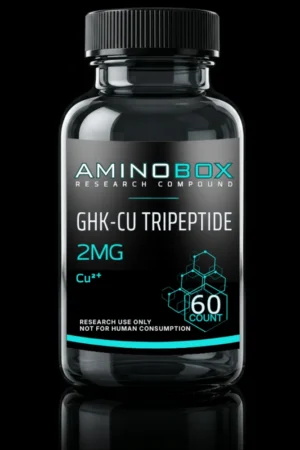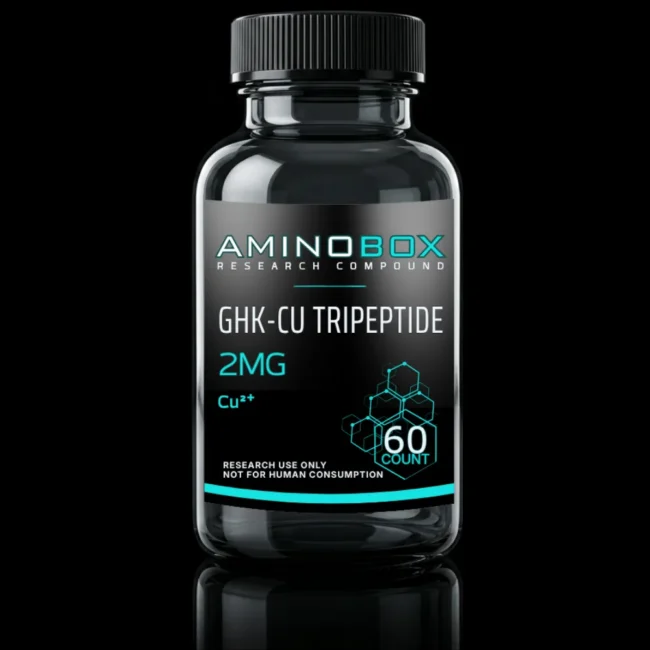

GHK-cu Copper Tripeptide


GHK-Cu Copper Tripeptide is a biological signal for tissue remodelling, repair coordination, and extracellular matrix maintenance.
$58.00
In stock
Guaranteed Safe Checkout


| Product Name | GHK-Cu Copper Tripeptide-1 (Oral Encapsulated) |
| Functional Class | Peptidics |
| Form | Lyophilized |
| Purity | 99%+ |
| Content | 5mg |
| Count | 1 capsule |
| Research Use | Research Grade |
| CAS Number | See COA |
| Molecular Weight | See COA |
| Molecular Formula | See COA |
| PubChem CID | See COA |
| Appearance | White to off-white powder |
| Storage | 2-8C preferred |
Active Peptide 2 items
Excipients 4 items
Reconstitution Solvents 4 items
Buffer Systems 4 items
Lyoprotectants & Cryoprotectants 3 items
Preservatives & Antimicrobials 3 items
Counter Ions & Salt Forms 3 items
Chelating Agents 2 items
Antioxidants & Stabilizers 3 items
| Water | Highly soluble |
| Acidified Water | Highly soluble |
| DMSO | Highly soluble |
| Ethanol | Moderate |
| Lipid solvents | Poor compatibility |
| Lyophilized | 2–8°C preferred |
| Long-term | −20°C recommended |
| Light Sensitivity | Moderate |
| Moisture | High sensitivity |
| Stability | Stable when dry |
| Container | Sterile sealed vial |
AminoBox products are supplied for research, analytical, and laboratory use only. Product information is provided for educational and technical reference and does not constitute medical advice. Products are not intended to diagnose, treat, cure, or prevent any disease.
Product Composition
| Property | Specification |
|---|---|
| Product Name | GHK-Cu (Copper Tripeptide) |
| Alternate Names | Glycyl-L-histidyl-L-lysine copper complex, Copper peptide |
| Capsule Content | 2 mg |
| Package Size | 60 Capsules |
| Compound Class | Endogenous tripeptide–metal complex |
| Physical Form | Encapsulated powder |
| Appearance | Blue to blue-green powder (copper-bound peptide) |
| Purity | Typically ≥98% (research grade, supplier dependent) |
| Research Category | Skin repair / collagen signaling / regenerative biology compound |
Molecular Information
| Property | Specification |
|---|---|
| Molecular Formula | C14H24CuN6O4 |
| Molecular Weight | ~403.9 g/mol |
| CAS Number | 89030-95-5 |
| PubChem CID | 3084370 |
| Compound Type | Copper-bound tripeptide complex |
| Stereochemistry | All-L amino acid peptide backbone |
Structural Classification
| Category | Description |
|---|---|
| Compound Type | Copper chelated tripeptide |
| Functional Class | Tissue remodeling and wound-healing signaling peptide |
| Biological Focus | Skin regeneration and extracellular matrix repair |
| Mechanistic Focus | Copper-dependent enzymatic activation (collagen, elastin synthesis pathways) |
| Chemical Family | Endogenous bioactive peptide-metal complex |
Mechanism Research Profile
| Research Focus | Description |
|---|---|
| Collagen Synthesis | Stimulates collagen and glycosaminoglycan production in fibroblasts |
| Skin Remodeling | Enhances extracellular matrix repair and dermal restructuring |
| Wound Healing | Promotes tissue regeneration and repair signaling cascades |
| Antioxidant Activity | Copper-mediated reduction of oxidative stress in tissue environments |
| Hair Follicle Research | Studied for follicular signaling and growth-phase support |
Research Areas Commonly Associated
| Research Area | Focus |
|---|---|
| Dermatological Biology | Skin regeneration and anti-aging pathways |
| Wound Healing Science | Tissue repair and recovery mechanisms |
| Cosmetic Biochemistry | Collagen and elastin remodeling |
| Cellular Aging Research | Extracellular matrix degradation and repair |
| Connective Tissue Biology | Fibroblast and structural protein synthesis |
Solubility Profile
| Solvent | Solubility |
|---|---|
| Sterile Water | Highly soluble |
| Bacteriostatic Water | Compatible |
| Saline | Soluble |
| DMSO | Limited compatibility |
| Organic solvents | Not soluble |
Storage Specifications
| Parameter | Recommendation |
|---|---|
| Capsule Storage | 2–8°C preferred |
| Long-term Storage | -20°C recommended |
| Light Sensitivity | Moderate |
| Moisture Sensitivity | High |
| Stability | Stable in dry encapsulated form |
| Container Type | Sealed opaque capsule bottle |
Technical Characteristics
| Feature | Notes |
|---|---|
| Delivery Format | Encapsulated powder (2 mg per capsule, 60-count bottle) |
| Structural Advantage | Copper chelation enhances bioactivity in collagen-related pathways |
| Bioactivity Profile | Endogenous repair peptide signaling molecule |
| Configuration | Linear tripeptide complexed with Cu²⁺ ion |
| Stability Profile | High stability in dry form; sensitive when in solution |
| Research Use | Laboratory research only |
GHK-cu Copper Tripeptide | 2mg
Within advanced biochemical and dermatological research, GHK-Cu is widely investigated for its ability to influence gene expression patterns associated with skin regeneration, wound repair, inflammation modulation, and structural protein synthesis. Its unique ability to bind copper ions (Cu²⁺) gives it a dual function: peptide signaling combined with trace mineral delivery, both of which are essential to enzymatic and structural processes in connective tissue biology.
What is GHK-cu Copper Tripeptide?
GHK-Cu is a naturally occurring tripeptide composed of:
Glycyl–L-Histidyl–L-Lysine + Copper (Cu²⁺)
This simple structure belies a highly complex biological role. Discovered in the 1970s, GHK-Cu was originally isolated from human plasma and later identified as a molecule that significantly decreases in concentration with age. This decline has led researchers to investigate its relationship to aging phenotypes, including reduced tissue repair capacity, collagen fragmentation, and diminished skin elasticity.
The peptide is now widely studied in the fields of:
- Dermatological regeneration science
- Wound healing biology
- Extracellular matrix remodeling
- Anti-inflammatory signaling pathways
- Oxidative stress modulation
- Stem cell activation environments
Mechanism of Action: Why GHK-cu Copper Tripeptide is Biologically Unique
GHK-cu Copper Tripeptide operates through multiple interconnected biological mechanisms rather than a single linear pathway. This pleiotropic activity is one of the reasons it has remained a major focus in regenerative science.
1. Gene Expression Modulation
One of the most well-documented properties of GHK-cu Copper Tripeptide is its ability to influence gene expression. Research indicates it may modulate hundreds of genes associated with tissue repair and regeneration, including:
- Upregulation of collagen-related genes (COL1A1, COL3A1)
- Increased expression of elastin and dermal matrix proteins
- Activation of wound healing and repair signaling pathways
- Modulation of growth factor-related gene networks
At the same time, GHK-cu Copper Tripeptide has been observed in experimental models to downregulate genes associated with inflammation and tissue degradation.
2. Collagen, Elastin & Extracellular Matrix Remodeling
The extracellular matrix (ECM) is the structural scaffold of the skin and connective tissue. With aging, ECM integrity declines due to reduced fibroblast activity and increased enzymatic breakdown (matrix metalloproteinases, or MMPs).
GHK-cu Copper Tripeptide is studied for its ability to:
- Support fibroblast activity
- Promote collagen synthesis and organization
- Improve elastin fiber structure
- Reduce excessive ECM degradation signaling
- Enhance dermal structural density
This makes it a key molecule in research involving visible aging, skin firmness, and connective tissue integrity.
3. Copper-Dependent Enzymatic Support
Copper is an essential cofactor for several enzymes involved in tissue stability and antioxidant defense. GHK-cu Copper Tripeptide acts as a biologically safe transport system for copper ions, supporting:
- Lysyl oxidase activity (collagen cross-linking enzyme)
- Superoxide dismutase (SOD) antioxidant defense
- Cellular respiration pathways
- Connective tissue maturation processes
This copper-delivery mechanism is tightly regulated, allowing biological systems to utilize copper without triggering oxidative toxicity.
4. Anti-Inflammatory and Antioxidant Signaling
Chronic low-grade inflammation and oxidative stress are key contributors to visible and structural aging. GHK-cu Copper Tripeptide has been observed in research models to help regulate inflammatory mediators and oxidative stress markers.
Proposed mechanisms include:
- Reduction of pro-inflammatory cytokine signaling
- Modulation of oxidative stress response pathways
- Support of cellular detoxification systems
- Protection of dermal structural proteins from degradation
This positions GHK-cu Copper Tripeptide as both a regenerative and protective signaling molecule.
5. Angiogenesis and Tissue Oxygenation
Another important area of research involves GHK-cu Copper Tripeptide’s influence on angiogenesis — the formation of new microvasculature.
Experimental findings suggest potential involvement in:
- Vascular endothelial growth signaling
- Capillary network support
- Tissue oxygenation improvement pathways
- Nutrient delivery to regenerating tissue
These effects are particularly relevant in wound healing and tissue repair models.
Age-Related Decline of GHK-Cu
Scientific literature suggests that endogenous GHK-cu Copper Tripeptide levels decline significantly with age. This decline correlates with several observable biological changes:
- Reduced skin elasticity
- Slower wound healing response
- Increased collagen fragmentation
- Higher oxidative stress burden
- Decreased dermal regeneration efficiency
Because of this, GHK-cu Copper Tripeptide is widely studied as a “youth-associated regulatory peptide” within regenerative biology research.
Cosmetic & Research Applications
GHK-Cu is extensively used in advanced cosmetic and experimental research contexts involving:
- Skin rejuvenation systems
- Fine line and wrinkle appearance studies
- Dermal thickness and firmness research
- Hair follicle stimulation models
- Post-injury tissue recovery research
- Anti-aging peptide formulations
- Extracellular matrix repair systems
- Oxidative stress reduction studies
Its broad biological footprint makes it one of the most multifunctional peptides in regenerative science.
Stability & Formulation Considerations
GHK-Cu is a water-soluble peptide complex that integrates effectively into aqueous systems such as serums, gels, and oral capsule formats.
However, its stability is influenced by:
- pH conditions
- Light exposure
- Oxidation state of copper ions
- Chelation balance
- Storage temperature
Proper formulation is essential to maintain copper-peptide integrity and ensure biological activity in research settings.
Important Disclaimer
This product is supplied strictly for laboratory, analytical, and research purposes only. It is not intended to diagnose, treat, cure, or prevent any disease. Not approved for human consumption. GHK-Cu remains an investigational compound within scientific and cosmetic research environments, with most findings derived from preclinical and experimental studies.
GHK-Cu Research References Table
| Category | Study / Paper | Focus | Link |
|---|---|---|---|
| Core Review | GHK-Cu Mechanisms & Applications (Peptide Breakdown Review) | Collagen synthesis, wound healing, gene expression modulation | https://peptidebreakdown.com/peptides/ghk-cu/ |
| Comprehensive Database Review | GHK-Cu Research Profile (Peptide Research Guide) | Gene regulation, ECM remodeling, anti-inflammatory activity | https://peptideresearchguide.org/ghk-cu/ |
| Scientific Summary | GHK-Cu Research Review (BioTech Pharma Literature Review) | Tissue regeneration, aging biology, copper signaling | https://biotechpharma.org/ghk-cu-research |
| Physicochemical Study | Stability & formulation characteristics of GHK-Cu | Stability, solubility, dermal delivery properties | https://www.allofpeptides.com/peptides/ghk-cu/studies/1328 |
| Clinical Evidence Summary | Post-procedure & skin regeneration clinical review | Skin density, wrinkle reduction, cosmetic outcomes | https://www.peptidejournal.org/skincare/ghk-cu-post-procedure-recovery-clinical-evidence |
| Cosmetic Evidence Review | Copper Peptides in Dermatology (Vogue summary of clinical data) | Collagen production, skin elasticity, anti-aging outcomes | https://www.vogue.com/article/copper-peptides |
| Research Aggregation Database | GHK-Cu Evidence Overview (PeptideTrace) | Human/animal/in-vitro study breakdown | https://www.peptidetrace.com/compounds/ghk |