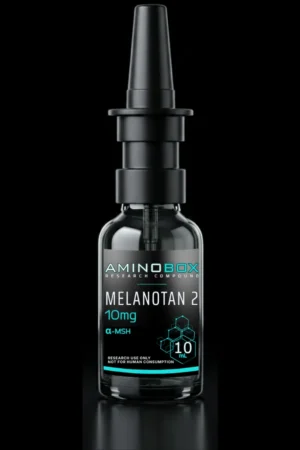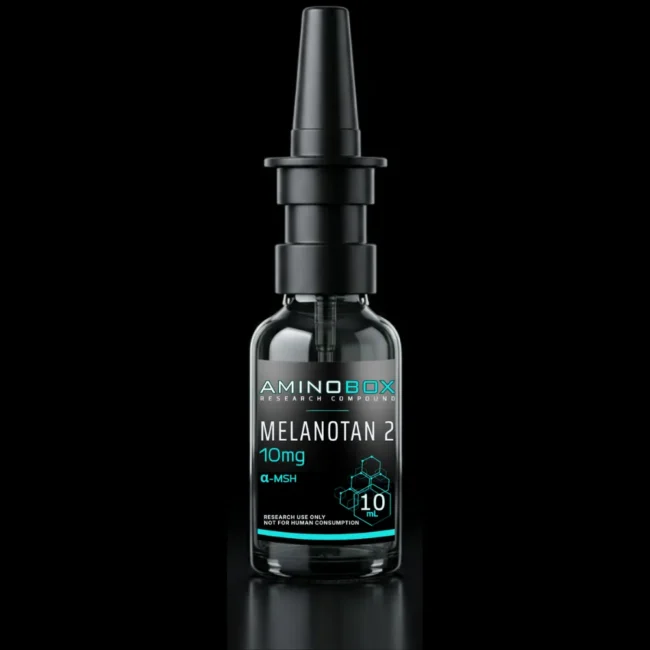

Melanotan II Atomized Solution


Melanotan II Nasal Spray is widely researched for producing tanned skin, energy homeostasis, and neuroendocrine signaling networks.
$54.00
In stock
Guaranteed Safe Checkout


| Product Name | Melanotan II |
| Functional Class | Peptidics |
| Form | Lyophilized |
| Purity | 99%+ |
| Content | 5mg |
| Count | 1 vial |
| Research Use | Research Grade |
| CAS Number | See COA |
| Molecular Weight | See COA |
| Molecular Formula | See COA |
| PubChem CID | See COA |
| Appearance | White to off-white powder |
| Storage | 2-8C preferred |
Active Peptide 2 items
Excipients 4 items
Reconstitution Solvents 4 items
Buffer Systems 4 items
Lyoprotectants & Cryoprotectants 3 items
Preservatives & Antimicrobials 3 items
Counter Ions & Salt Forms 3 items
Chelating Agents 2 items
Antioxidants & Stabilizers 3 items
| Water | Highly soluble |
| Acidified Water | Highly soluble |
| DMSO | Highly soluble |
| Ethanol | Moderate |
| Lipid solvents | Poor compatibility |
| Lyophilized | 2–8°C preferred |
| Long-term | −20°C recommended |
| Light Sensitivity | Moderate |
| Moisture | High sensitivity |
| Stability | Stable when dry |
| Container | Sterile sealed vial |
AminoBox products are supplied for research, analytical, and laboratory use only. Product information is provided for educational and technical reference and does not constitute medical advice. Products are not intended to diagnose, treat, cure, or prevent any disease.
Product Composition
| Property | Specification |
|---|---|
| Product Name |
Melanotan II Nasal Spray |
| Alternate Names | MT-II, Synthetic α-MSH analog |
| Peptide Content | 10mg |
| Peptide Class | Synthetic cyclic melanocortin peptide |
| Physical Form | Lyophilized powder into nasal solution |
| Appearance | White to off-white powder |
| Purity | Typically ≥98% |
| Research Category | Melanocortin receptor / pigmentation research |
Molecular Information
| Property | Specification |
|---|---|
| Molecular Formula | C50H69N15O9 |
| Molecular Weight | ~1024.2 g/mol |
| CAS Number | 121062-08-6 |
| PubChem CID | 16132396 |
| Peptide Configuration | Cyclic heptapeptide |
| Sequence | Ac-Nle-c[Asp-His-D-Phe-Arg-Trp-Lys]-OH |
| Compound Type | Synthetic melanocortin receptor agonist |
Structural Classification
| Category | Description |
|---|---|
| Compound Type | Cyclic synthetic peptide |
| Functional Class | Melanocortin receptor agonist |
| Biological Focus | Pigmentation & energy regulation signaling |
| Mechanistic Focus | MC1R, MC3R, MC4R, MC5R activation |
| Chemical Family | α-MSH analog peptide |
Mechanism Research Profile
| Research Focus | Description |
|---|---|
| Melanocortin Activation | Studied for stimulation of MC1R pigmentation pathways |
| Melanin Production | Investigated for eumelanin synthesis regulation |
| UV Response Modulation | Research in UV-induced skin protective mechanisms |
| Appetite Regulation | Studied via MC4R pathway interactions |
| Sexual Function Research | Evaluated in melanocortin-linked signaling studies |
Research Areas Commonly Associated
| Research Area | Focus |
|---|---|
| Pigmentation Biology | Melanin synthesis pathways |
| Dermatological Research | Skin photoprotection mechanisms |
| Endocrine Signaling | Melanocortin system activity |
| Metabolic Regulation | Appetite and energy balance pathways |
| Neurochemical Signaling | MC4R-associated neural pathways |
Solubility Profile
| Solvent | Solubility |
|---|---|
| Sterile Water | Soluble |
| Bacteriostatic Water | Compatible for reconstitution |
| DMSO | Partially soluble |
| Buffered Solutions | Compatible depending on pH |
| Saline Solution | Generally compatible |
Storage Specifications
| Parameter | Recommendation |
|---|---|
| Lyophilized Storage | 2–8°C (refrigerated) |
| Long-term Storage | -20°C preferred |
| Reconstituted Storage | 2–8°C refrigerated |
| Light Sensitivity | Moderate |
| Moisture Sensitivity | High |
| Stability | Stable in dry lyophilized state |
| Container Type | Sterile sealed vial |
Technical Characteristics
| Feature | Notes |
|---|---|
| Delivery Format | Lyophilized peptide into nasal spray |
| Structural Advantage | Cyclized structure improves receptor binding stability |
| Configuration | Synthetic α-MSH analog peptide |
| Stability Profile | Moderately stable; sensitive to heat and enzymatic degradation |
| Research Use | Laboratory research only |
Melanotan II Nasal Spray | 10mg (10mL) Peptide Solution
Research-Grade Melanocortin Receptor Agonist Formulation
Melanotan II Nasal Spray is a synthetic cyclic heptapeptide analog of α-melanocyte-stimulating hormone (α-MSH) designed to interact with the melanocortin receptor system (MC1R–MC5R), a network of G-protein-coupled receptors involved in pigmentation, energy regulation, and neuroendocrine signaling.
It is structurally derived from the pro-opiomelanocortin (POMC) pathway, with targeted modifications that enhance receptor affinity and improve resistance to enzymatic degradation.
Unlike linear peptides that rapidly degrade in biological environments, Melanotan II Nasal Spray is conformationally stabilized through cyclization, which improves structural rigidity, receptor binding efficiency, and overall functional persistence.
Molecular & Structural Pharmacology
belongs to the melanocortin peptide family, a class of ligands that activate GPCR-based signaling pathways distributed across multiple physiological systems.
Its cyclic structure produces a pre-organized receptor-binding conformation, allowing stronger interaction with melanocortin receptors compared to endogenous α-MSH under equivalent concentrations.
This structural optimization enhances:
- Receptor binding stability
- Proteolytic resistance
- Signal amplification efficiency
Melanotan II Nasal Spray Formulation Overview
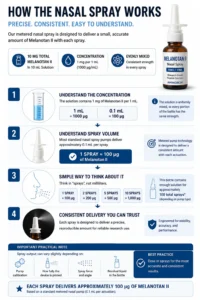
This product is a 10 mL isotonic intranasal solution containing 10 mg of Melanotan II, engineered for consistent spray dispersion and peptide stabilization.
Active Compound
Melanotan II — 10 mg total per 10 mL
Concentration: 1 mg/mL (1000 µg/mL)
Excipients & Functional Roles
Each component is selected to support peptide stability, mucosal compatibility, and delivery consistency:
Distilled water serves as the high-purity solvent base, minimizing ionic variability.
Glycerin improves viscosity, spray retention, and mucosal adhesion.
Sodium chloride maintains isotonic balance with nasal tissue (~0.9% physiological range).
Phenoxyethanol and ethylhexylglycerin provide antimicrobial protection while maintaining peptide compatibility.
Watermelon flavoring is included as an organoleptic masking agent to improve administration tolerance.
Together, this system supports stable solubility, uniform atomization, and reproducible dosing performance.
Melanotan II Nasal Spray Delivery & Spray Calibration
Because intranasal delivery depends on mechanical pump volume, dose accuracy is determined by actuation displacement.
At a concentration of 1 mg/mL, a standard 0.10 mL nasal spray actuation delivers:
~100 µg Melanotan II per spray (approximate, pump-dependent)
This makes dosing dependent on spray calibration and device output consistency, as is standard in metered nasal delivery systems.
Mechanism of Action (Melanocortin Signaling Pathway)
Melanotan II Nasal Spray acts as a non-selective melanocortin receptor agonist, with highest functional relevance at MC1R, the receptor most associated with melanogenesis regulation.
Upon receptor binding, it activates a canonical GPCR signaling cascade:
Receptor activation triggers Gs protein signaling, stimulating adenylyl cyclase and increasing intracellular cAMP levels. Elevated cAMP activates protein kinase A (PKA), which phosphorylates downstream transcriptional regulators including MITF (microphthalmia-associated transcription factor).
MITF upregulation enhances expression of key melanogenic enzymes such as tyrosinase, TRP-1, and TRP-2, which collectively regulate melanin synthesis within melanocytes.
This results in amplification of endogenous pigmentation signaling pathways rather than direct enzymatic inhibition or structural alteration of melanocytes.
Melanotan II Nasal Spray and System-Wide Melanocortin Activity
The melanocortin receptor system extends beyond skin pigmentation and is also expressed in:
- Hypothalamic energy regulation centers
- Central nervous system appetite pathways
- Neuroendocrine signaling circuits
- Peripheral metabolic tissues
Because of this distribution, melanocortin agonists are studied in multiple physiological contexts beyond dermatological pigmentation research.
Peptide Stability & Structural Advantages of Melanotan II Nasal Spray
Melanotan II exhibits enhanced stability compared to endogenous melanocortins due to its cyclic structure, which reduces enzymatic breakdown and improves receptor interaction efficiency.
Key stability features include:
- Cyclized backbone reducing proteolytic cleavage
- Improved receptor-binding conformation
- Reduced terminal degradation susceptibility
- Balanced hydrophobic and hydrophilic interaction profile
These properties contribute to improved persistence in biological environments relative to linear peptide analogs.
Intranasal Delivery Characteristics
Intranasal administration is a non-invasive delivery route characterized by high vascular absorption potential and partial bypass of first-pass hepatic metabolism.
Absorption occurs primarily through:
- Nasal epithelial diffusion pathways
- Paracellular transport across tight junctions
- Respiratory mucosa systemic uptake routes
This delivery system is widely studied for peptides due to its ability to support rapid systemic exposure without gastrointestinal degradation.
Mechanistic Summary of Melanotan II Nasal Spray
Melanotan II Nasal Spray functions as a:
- Melanocortin GPCR agonist
- cAMP pathway activator
- MITF-mediated transcriptional regulator
- Melanogenesis signaling amplifier
Its activity is based on signal pathway enhancement of endogenous biological processes, particularly within melanocortin-regulated systems.
Scientific Positioning
Melanotan II Nasal Sprayis a research-grade melanocortin receptor agonist peptide studied for its role in pigmentation signaling pathways, neuroendocrine receptor activity, and cyclic AMP-mediated transcriptional regulation.
| Ref # | Title | Journal | Focus | Link |
|---|---|---|---|---|
| 1 | Evaluation of melanotan-II, a superpotent cyclic melanotropic peptide analogue | Life Sciences | Melanogenesis and skin pigmentation induction | https://nih.gov |
| 2 | Synthetic melanotropic peptide initiates erections in men with psychogenic erectile dysfunction | Journal of Urology | MC4R activation and sexual stimulation properties | https://nih.gov |
| 3 | Melanoma associated with the use of the synthetic melanocortin analogue melanotan-II | Dermatology | Melanocyte overstimulation risks and clinical observations | https://nih.gov |
| 4 | Changes of melanocytic lesions induced by Melanotan | Journal of the German Society of Dermatology | UV tanning interactions, atypical nevi, and skin darkening | https://nih.gov |
| 5 | Preformulation studies with melanotan-II: a potential skin cancer chemopreventive peptide | Journal of Pharmaceutical Sciences | Peptide stability, degradation pathways, and formulation physics | https://nih.gov |