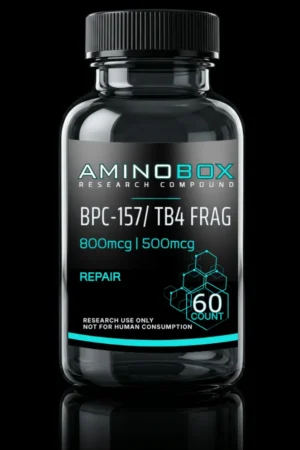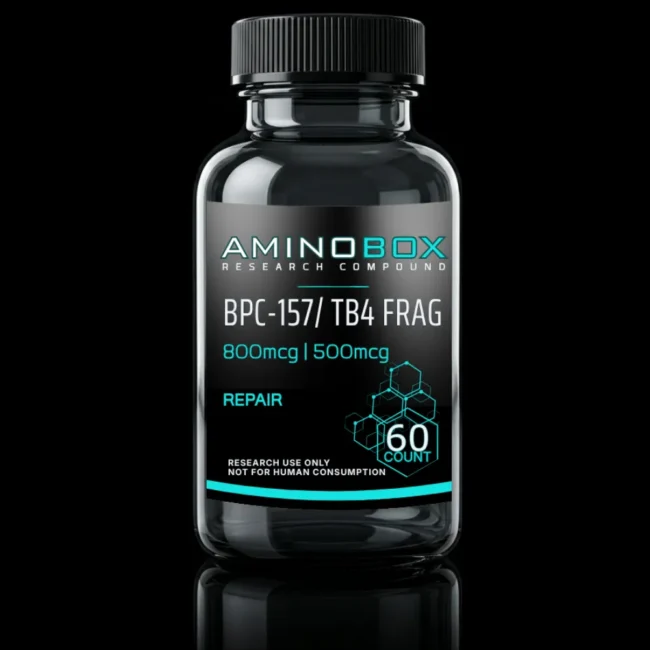

BPC-157 / Thymosin Beta-4


BPC-157 Arginate and Thymosin Beta-4 are advanced dual-peptides for tissue remodelling, cellular migration, angiogenic signalling, and regenerative processes.
$139.00
In stock
Guaranteed Safe Checkout


| Product Name | BPC-157 / Thymosin Beta-4 |
| Functional Class | Peptidics |
| Form | Lyophilized |
| Purity | 99%+ |
| Content | 5mg |
| Count | 1 vial |
| Research Use | Research Grade |
| CAS Number | See COA |
| Molecular Weight | See COA |
| Molecular Formula | See COA |
| PubChem CID | See COA |
| Appearance | White to off-white powder |
| Storage | 2-8C preferred |
Active Peptide 2 items
Excipients 4 items
Reconstitution Solvents 4 items
Buffer Systems 4 items
Lyoprotectants & Cryoprotectants 3 items
Preservatives & Antimicrobials 3 items
Counter Ions & Salt Forms 3 items
Chelating Agents 2 items
Antioxidants & Stabilizers 3 items
| Water | Highly soluble |
| Acidified Water | Highly soluble |
| DMSO | Highly soluble |
| Ethanol | Moderate |
| Lipid solvents | Poor compatibility |
| Lyophilized | 2–8°C preferred |
| Long-term | −20°C recommended |
| Light Sensitivity | Moderate |
| Moisture | High sensitivity |
| Stability | Stable when dry |
| Container | Sterile sealed vial |
AminoBox products are supplied for research, analytical, and laboratory use only. Product information is provided for educational and technical reference and does not constitute medical advice. Products are not intended to diagnose, treat, cure, or prevent any disease.
Product Composition
| Property | Specification |
|---|---|
| Product Name | BPC-157 / Thymosin Beta-4 Blend |
| Alternate Names | Body Protection Compound-157 + TB-500 (Thymosin Beta-4 fragment analog) |
| Capsule Content | 800 mcg / 500 mcg |
| Package Size | 60 Capsules |
| Compound Class | Synthetic peptide blend (regenerative research peptides) |
| Physical Form | Encapsulated powder blend |
| Appearance | White to off-white powder |
| Purity | Typically ≥98% (research grade, supplier dependent) |
| Research Category | Tissue repair / angiogenesis / regenerative biology research |
Molecular Information
| Property | Specification |
|---|---|
| BPC-157 Formula | C62H98N16O22 |
| BPC-157 Molecular Weight | ~1419.6 g/mol |
| Thymosin Beta-4 (TB-500) Formula | C212H350N56O78S |
| TB-500 Molecular Weight | ~4963 g/mol (full peptide) |
| CAS Numbers | 137525-51-0 (BPC-157); 77591-33-4 (Thymosin Beta-4) |
| PubChem CID | 9941957 (BPC-157) |
| Compound Type | Synthetic peptide combination |
| Stereochemistry | All-L amino acid peptides |
Structural Classification
| Category | Description |
|---|---|
| Compound Type | Gastric peptide + actin-binding peptide blend |
| Functional Class | Cytoprotective + regenerative signaling peptides |
| Biological Focus | Tissue repair, angiogenesis, and cellular migration |
| Mechanistic Focus | Collagen synthesis, actin regulation, endothelial repair signaling |
| Chemical Family | Linear bioactive peptides |
Mechanism Research Profile
| Research Focus | Description |
|---|---|
| Tissue Regeneration | Studied for acceleration of muscle, tendon, and ligament healing |
| Angiogenesis | Promotes new blood vessel formation in injury models |
| Cell Migration | Thymosin Beta-4 involved in actin cytoskeleton remodeling |
| Wound Healing | Enhanced fibroblast activity and extracellular matrix repair |
| Inflammation Modulation | Reduced inflammatory cytokine expression in preclinical studies |
Research Areas Commonly Associated
| Research Area | Focus |
|---|---|
| Regenerative Medicine | Soft tissue repair and recovery |
| Sports Injury Research | Tendon, ligament, and muscle healing |
| Vascular Biology | Endothelial repair and angiogenesis |
| Wound Healing Science | Skin and connective tissue regeneration |
| Cellular Biology | Cytoskeletal and migration pathways |
Solubility Profile
| Solvent | Solubility |
|---|---|
| Sterile Water | Highly soluble |
| Bacteriostatic Water | Compatible |
| Saline | Soluble |
| DMSO | Limited compatibility |
| Organic solvents | Not soluble |
Storage Specifications
| Parameter | Recommendation |
|---|---|
| Capsule Storage | 2–8°C preferred |
| Long-term Storage | -20°C recommended |
| Light Sensitivity | Moderate |
| Moisture Sensitivity | High |
| Stability | Stable in dry encapsulated form |
| Container Type | Sealed opaque capsule bottle |
Technical Characteristics
| Feature | Notes |
|---|---|
| Delivery Format | Encapsulated powder blend (800 mcg / 500 mcg, 60-count bottle) |
| Structural Advantage | Synergistic regenerative peptide combination |
| Bioactivity Profile | Tissue repair + cytoskeletal remodeling signaling |
| Configuration | Linear peptide blend |
| Stability Profile | High stability when dry |
| Research Use | Laboratory research only |
BPC-157 / Thymosin Beta-4 | 800mcg / 500mcg
1. Skin Rejuvenation
- Collagen Synthesis: Tβ4 significantly boosts collagen production, a vital protein that underpins skin elasticity and firmness. By enhancing collagen levels, Tβ4 effectively diminishes fine lines and wrinkles, resulting in smoother, more youthful-looking skin.
- Cellular Renewal: Tβ4 accelerates the repair and regeneration of skin cells, which is crucial for maintaining a healthy, radiant complexion. This process aids in mitigating signs of aging and enhancing overall skin texture.
2. Wound Healing and Scar Minimization
- Scar Reduction: Tβ4’s ability to facilitate tissue repair and reduce inflammation makes it highly effective in minimizing scars from injuries, acne, or surgical procedures. It promotes faster wound healing with reduced scar formation, contributing to clearer, more even-toned skin.
3. Inflammation Reduction
- Anti-Inflammatory Action: Tβ4 possesses potent anti-inflammatory properties that can soothe irritated skin, reduce redness, and alleviate conditions such as rosacea or sensitivity. By controlling inflammation, Tβ4 helps maintain a more even and youthful complexion.
4. Enhanced Skin Hydration
- Moisture Retention: Tβ4 improves the skin’s ability to retain moisture, leading to better hydration levels. Well-hydrated skin appears plumper and more radiant, which is key to reducing visible signs of aging.
5. Hair Growth Stimulation
- Follicle Activation: Tβ4 has demonstrated the ability to stimulate hair follicles, promoting hair growth and thickness. This makes it a potential treatment for hair thinning and loss, supporting a youthful appearance.
6. Reduction of Fine Lines and Wrinkles
- Surface Smoothing: Tβ4 promotes cell migration and repair, smoothing the skin’s surface and reducing the appearance of fine lines and wrinkles. Consistent use in skincare can lead to a more youthful and refreshed look.
7. Enhanced Healing Post-Cosmetic Procedures
- Accelerated Recovery: Tβ4 is utilized to expedite healing after cosmetic procedures such as microneedling, chemical peels, or laser treatments. It reduces downtime, minimizes post-procedure redness, and enhances overall results.
8. Skin Barrier Support
- Barrier Strengthening: By promoting the health of skin cells and tissues, Tβ4 strengthens the skin’s natural barrier, protecting it from environmental damage and preserving its resilience against aging.
9. Skin Tone Brightening
- Pigmentation Balancing: Tβ4 may contribute to a more even skin tone by repairing damaged skin cells and reducing the appearance of hyperpigmentation or age spots.
Understanding BPC-157 Arginate
BPC-157 (Body Protection Compound-157) is a synthetic pentadecapeptide originally derived from a protective protein sequence identified in human gastric juice. The peptide contains 15 amino acids and has become one of the most heavily researched experimental peptides in regenerative and tissue-protection literature.
Its amino acid sequence:
Gly-Glu-Pro-Pro-Pro-Gly-Lys-Pro-Ala-Asp-Asp-Ala-Gly-Leu-Val
contains several structural characteristics believed to contribute to its unusual resistance to enzymatic degradation and gastric acid hydrolysis. Unlike many peptides that rapidly degrade during digestion, BPC-157 demonstrates notable stability in gastric environments, making oral delivery systems a major area of investigation.
The arginate salt form was specifically engineered to improve physicochemical stability, peptide integrity, and compatibility with oral capsule delivery systems. Current research discussions suggest arginate formulations may offer:
- Improved acid stability
- Enhanced aqueous integrity
- Reduced peptide degradation
- Greater storage stability
- Improved oral survivability characteristics
though human pharmacokinetic validation remains limited.
Mechanistic Research of BPC-157
BPC-157 is considered a highly pleiotropic peptide, meaning it appears to interact with multiple biological pathways simultaneously within preclinical systems.
Research interest has focused heavily on:
Angiogenic Signaling
Experimental data suggests BPC-157 may modulate pathways involving:
- VEGF (Vascular Endothelial Growth Factor)
- VEGFR2 signaling
- Nitric oxide (NO) systems
- Endothelial repair pathways
- Microvascular circulation dynamics
These systems are critically important in tissue remodeling because vascular perfusion governs oxygen transport, nutrient delivery, and extracellular matrix turnover.
Gastrointestinal Cytoprotection
BPC-157’s gastric origin remains central to its research identity. Experimental models have explored its relationship to:
- Gastric mucosal integrity
- Intestinal barrier signaling
- Epithelial repair pathways
- Gastrointestinal tissue resilience
- Cytoprotective peptide activity
Oral delivery systems are particularly interesting in GI-focused research because the peptide directly interfaces with gastrointestinal tissue surfaces before systemic distribution.
Musculoskeletal & Connective Tissue Models
Preclinical studies have also investigated BPC-157 in relation to:
- Tendon fibroblast activity
- Ligament remodeling
- Muscle recovery signaling
- Collagen organization pathways
- FAK-paxillin signaling systems
- Fibroblast migration and adhesion dynamics
These pathways are highly relevant in experimental tissue-repair environments involving structural connective tissues.
1. Skin Regeneration and Rejuvenation
- Accelerated Healing: BPC 157 is renowned for its ability to speed up the healing process, which is beneficial for repairing damaged skin, minimizing scars, and promoting overall skin regeneration. This results in a more youthful and rejuvenated complexion.
- Collagen Production: By stimulating collagen synthesis, BPC 157 helps maintain skin elasticity and firmness, thereby reducing the appearance of fine lines and wrinkles. Collagen is crucial for keeping the skin smooth and plump.
2. Wound Healing and Scar Reduction
- Scar Minimization: Similar to Thymosin Beta 4, BPC 157 can effectively reduce scar formation by promoting efficient wound healing. This attribute is particularly valuable in cosmetic procedures or injuries where minimizing scars is important for aesthetic purposes.
3. Anti-Inflammatory Properties
- Skin Inflammation Reduction: BPC 157’s powerful anti-inflammatory properties can help soothe irritated skin and reduce redness, making it beneficial for conditions like acne, rosacea, and other inflammatory skin issues, contributing to a clearer and more even complexion.
4. Gastrointestinal Health and Indirect Skin Benefits
- Gut Health Improvement: A healthy gut is closely linked to clear, glowing skin. BPC 157 is known for its ability to promote gastrointestinal healing, which can enhance nutrient absorption and reduce systemic inflammation, indirectly benefiting skin health.
5. Support for Hair Growth
- Follicle Stimulation: BPC 157 may promote hair growth by supporting the health of hair follicles, making it beneficial for individuals experiencing hair thinning or loss, and contributing to a more youthful appearance.
6. Post-Cosmetic Procedure Recovery
- Accelerated Healing: BPC 157 can significantly expedite recovery from cosmetic treatments such as microneedling, laser resurfacing, or chemical peels. It helps minimize downtime, reduce inflammation, and optimize the overall results of these procedures.
7. Skin Barrier Enhancement
- Barrier Fortification: BPC 157 supports the maintenance of a healthy skin barrier, which protects the skin from environmental damage and dehydration. A strong skin barrier is essential for youthful and resilient skin.
8. Fine Line and Wrinkle Reduction
- Surface Smoothing and Firming: Through its regenerative effects, BPC 157 can smooth the skin’s surface, reducing the appearance of fine lines and improving overall skin texture, thereby contributing to a more youthful and vibrant appearance.
9. Potential Anti-Aging Effects
- Cellular Regeneration: BPC 157’s ability to promote cellular repair and regeneration may help decelerate the aging process at the cellular level, leading to healthier skin and potentially slowing the visible signs of aging.
Scientific References – BPC-157 + Thymosin Beta-4 (TB-4)
| Ref # | Title | Journal | Focus | Link |
|---|---|---|---|---|
| 1 | Stable Gastric Pentadecapeptide BPC 157: Organoprotection and Adaptive Cytoprotection | Gut and Liver | Systemic protective pathways, organ protection, stress response biology | https://pubmed.ncbi.nlm.nih.gov/31158953/ |
| 2 | BPC-157 reduces radiation-induced liver injury via KLF4 upregulation | Life Sciences | Tissue protection, inflammation reduction, cellular repair signaling | https://pubmed.ncbi.nlm.nih.gov/36228773/ |
| 3 | Regeneration or Risk? A Narrative Review of BPC-157 for Musculoskeletal Healing | Journal of Clinical Medicine | Tendon/ligament repair, angiogenesis, safety review | https://pubmed.ncbi.nlm.nih.gov/40789979/ |
| 4 | Intra-articular injection of BPC-157 for knee pain conditions | Alternative Therapies in Health and Medicine | Joint tissue models, musculoskeletal recovery | https://pubmed.ncbi.nlm.nih.gov/34324435/ |
| 5 | Thymosin beta-4 promotes dermal wound repair in diabetic and aged mice | Wound Repair and Regeneration | Skin regeneration, wound healing, aging tissue repair | https://pubmed.ncbi.nlm.nih.gov/12581423/ |
| 6 | Thymosin beta-4 sulfoxide as an anti-inflammatory mediator | Nature Medicine | Anti-inflammatory signaling, immune modulation | https://pubmed.ncbi.nlm.nih.gov/10581087/ |
| 7 | Developmental regenerative roles of Thymosin beta-4 in adult tissues | Cells (MDPI) | Regenerative biology, embryonic-like repair signaling | https://pubmed.ncbi.nlm.nih.gov/34071596/ |