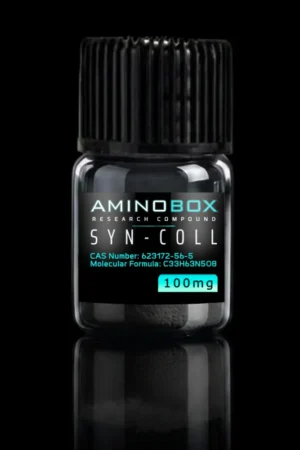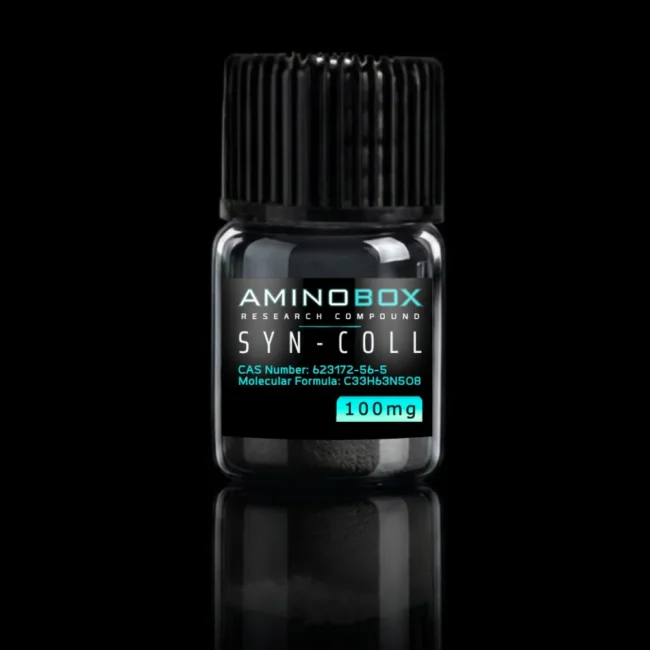

Syn-Coll | Palmitoyl Tripeptide-5


SYN-COLL supports visible dermal rejuvenation through collagen-focused cosmetic science. Developed for next-generation anti-aging formulations.
$58.00
In stock
Guaranteed Safe Checkout


| Product Name | Syn-Coll | Palmitoyl Tripeptide-5 |
| Functional Class | Dermatics |
| Form | Lyophilized |
| Purity | 99%+ |
| Content | 5mg |
| Count | 1 vial |
| Research Use | Research Grade |
| CAS Number | See COA |
| Molecular Weight | See COA |
| Molecular Formula | See COA |
| PubChem CID | See COA |
| Appearance | White to off-white powder |
| Storage | 2-8C preferred |
Active Peptide 2 items
Excipients 4 items
Reconstitution Solvents 4 items
Buffer Systems 4 items
Lyoprotectants & Cryoprotectants 3 items
Preservatives & Antimicrobials 3 items
Counter Ions & Salt Forms 3 items
Chelating Agents 2 items
Antioxidants & Stabilizers 3 items
| Water | Highly soluble |
| Acidified Water | Highly soluble |
| DMSO | Highly soluble |
| Ethanol | Moderate |
| Lipid solvents | Poor compatibility |
| Lyophilized | 2–8°C preferred |
| Long-term | −20°C recommended |
| Light Sensitivity | Moderate |
| Moisture | High sensitivity |
| Stability | Stable when dry |
| Container | Sterile sealed vial |
AminoBox products are supplied for research, analytical, and laboratory use only. Product information is provided for educational and technical reference and does not constitute medical advice. Products are not intended to diagnose, treat, cure, or prevent any disease.
Product Composition
| Property | Specification |
|---|---|
| Product Name | Syn-Coll 100mg |
| Alternate Names | Palmitoyl Tripeptide-5, Pal-Tripeptide-5, SYN®-COLL |
| Content | 100 mg |
| Package Size | 2mL glass jar with screw-on lid (bulk cosmetic peptide powder) |
| Compound Class | Synthetic lipo-tripeptide (collagen signaling peptide) |
| Physical Form | Lyophilized peptide powder |
| Appearance | White to off-white hygroscopic powder |
| Purity | Typically ≥95–99% (cosmetic grade, supplier dependent) |
| Research Category | Collagen stimulation / anti-aging cosmetic peptide research |
Molecular Information
| Property | Specification |
|---|---|
| Molecular Formula | C33H63N5O8 (Palmitoylated tripeptide backbone) |
| Molecular Weight | ~648–750 g/mol (varies slightly by salt form/manufacturer) |
| CAS Number | 623172-56-5 |
| PubChem CID | Not consistently assigned (cosmetic peptide classification) |
| Compound Type | Lipo-tripeptide (fatty acid–conjugated peptide) |
| Stereochemistry | Peptide-based chiral structure (L-amino acid configuration) |
Structural Classification
| Category | Description |
|---|---|
| Compound Type | Fatty-acid–modified signaling peptide |
| Functional Class | Collagen-stimulating peptide (matrikine mimetic) |
| Biological Focus | Dermal extracellular matrix signaling (fibroblast activation pathways) |
| Mechanistic Focus | Mimics ECM degradation signals → promotes collagen I synthesis signaling |
| Chemical Family | Cosmetic matrikine / peptide lipid conjugate |
Mechanism Research Profile
| Research Focus | Description |
|---|---|
| Collagen Signaling | Stimulates fibroblast signaling associated with collagen production pathways |
| ECM Support | Supports extracellular matrix remodeling signaling activity |
| Skin Firmness | Associated with improved dermal density appearance in cosmetic models |
| Anti-Aging Activity | Reduces appearance of fine lines via structural skin support pathways |
| Repair Signaling | Mimics fragments of collagen breakdown to trigger repair response |
Research Areas Commonly Associated
| Research Area | Focus |
|---|---|
| Anti-Aging Cosmetics | Wrinkle appearance reduction and dermal support |
| Dermatology Research | Skin matrix signaling and fibroblast stimulation |
| Collagen Biology | Type I collagen synthesis pathways |
| Wound-Healing Models | ECM regeneration signaling mechanisms |
| Cosmetic Peptide Science | Biomimetic matrikine peptide research |
Solubility Profile
| Solvent | Solubility |
|---|---|
| Water | Moderately soluble (best in buffered systems) |
| Acidified Water | Highly soluble |
| DMSO | Highly soluble |
| Ethanol | Limited to moderate |
| Lipid solvents | Compatible due to palmitoyl (lipid) chain |
Storage Specifications
| Parameter | Recommendation |
|---|---|
| Powder Storage | 2–8°C (refrigerated, dry environment) |
| Long-term Storage | -20°C preferred for stability |
| Light Sensitivity | Moderate |
| Moisture Sensitivity | High (hygroscopic peptide) |
| Stability | Stable in lyophilized (dry) form |
| Container Type | Airtight amber vial with desiccant |
Technical Characteristics
| Feature | Notes |
|---|---|
| Delivery Format | Bulk peptide powder for cosmetic formulation |
| Structural Advantage | Palmitoyl chain improves skin affinity and lipid compatibility |
| Bioactivity Profile | Collagen signaling / ECM modulation peptide |
| Configuration | Synthetic lipopeptide (matrikine mimetic design) |
| Stability Profile | High stability in dry form; sensitive in aqueous solution |
| Research Use | Cosmetic formulation / in vitro skin model research only |
Mechanism of Action
Palmitoyl Tripeptide-5 is specifically engineered to interact with biochemical pathways involved in collagen regulation, particularly those associated with Transforming Growth Factor-beta (TGF-β), a central signaling mediator responsible for extracellular matrix remodeling and fibroblast activation. (mdpi.com)
In youthful skin, fibroblasts maintain robust production of structural proteins including:
- Collagen Type I
- Collagen Type III
- Elastin
- Fibronectin
- Glycosaminoglycans
Over time, intrinsic aging, oxidative stress, glycation, UV exposure, and inflammatory processes contribute to declining fibroblast activity and progressive degradation of collagen architecture. This deterioration manifests visibly through skin laxity, fine lines, reduced elasticity, thinning dermal structure, and surface roughness.
SYN-COLL is designed to mimic endogenous signaling peptides capable of stimulating collagen-supportive pathways within dermal fibroblasts. Research suggests the peptide may help encourage extracellular matrix renewal by promoting collagen synthesis signaling and supporting structural protein integrity. (specialchem.com)
The peptide is additionally modified with a palmitoyl (fatty acid) chain, significantly improving lipophilicity and enhancing topical skin affinity, penetration potential, and formulation compatibility.
Advanced Biomimetic Engineering
SYN-COLL belongs to a sophisticated category of cosmetic peptides known as matrikines — messenger peptides naturally generated during extracellular matrix remodeling and tissue renewal processes. These peptides act as biochemical signals that communicate with fibroblasts and surrounding skin structures.
was specifically optimized to improve stability and dermal delivery while preserving biological signaling functionality. The addition of the palmitic acid moiety increases epidermal permeability and improves integration into lipid-rich topical delivery systems. (incidecoder.com)
This advanced structural engineering has made SYN-COLL a prominent active ingredient within premium anti-aging serums, peptide creams, regenerative moisturizers, and high-performance cosmeceutical systems.
Cosmetic Research Applications
Palmitoyl Tripeptide-5 is widely researched in cosmetic and dermatological formulation environments for applications involving:
- Collagen-supportive anti-aging systems
- Skin firmness and elasticity enhancement
- Fine line and wrinkle reduction
- Dermal density support
- Photoaging-focused formulations
- Texture-refinement systems
- Advanced peptide rejuvenation protocols
- Extracellular matrix support technologies
- Skin resilience and structural integrity formulations
Supplier-sponsored cosmetic studies have reported visible improvements in wrinkle appearance, skin smoothness, and elasticity following consistent topical application. Certain studies have suggested measurable improvements in collagen-related skin parameters over approximately 8–12 weeks of sustained use. (specialchem.com)
Synergistic Formulation Potential
SYN-COLL is frequently incorporated into multi-mechanistic anti-aging systems alongside complementary peptides and dermal support ingredients intended to address multiple hallmarks of visible skin aging simultaneously.
Common synergistic pairings include:
- Matrixyl® peptides
- Copper peptides (GHK-Cu)
- SNAP-8 (Acetyl Octapeptide-3)
- Acetyl Hexapeptide-8
- SYN-AKE®
- Hyaluronic acid
- Ceramides
- Retinoids
- Niacinamide
- Growth factor complexes
Within advanced peptide systems, SYN-COLL is commonly positioned as a structural support peptide targeting collagen integrity and extracellular matrix rejuvenation, while other actives address hydration, muscular tension, oxidative stress, and barrier restoration. (reddit.com)
Stability & Formulation Considerations
Due to its palmitoylated structure, Palmitoyl Tripeptide-5 demonstrates improved stability and formulation versatility compared to many water-soluble peptides. It is frequently utilized within emulsions, creams, serums, liposomal systems, hydrogel formulations, and peptide concentrates.
Formulation pH, oxidation management, preservative compatibility, and manufacturing temperature remain important variables influencing long-term peptide integrity and cosmetic performance.
Modern cosmetic laboratories often investigate nano-delivery systems, encapsulation technologies, and lipid-carrier systems to further optimize topical bioavailability and peptide penetration characteristics. (mdpi.com)
Important Disclaimer
This product is supplied strictly for cosmetic, laboratory, and research purposes only. Not intended to diagnose, treat, cure, or prevent any disease. Not for human consumption or injectable use. Cosmetic additive intended exclusively for formulation and research applications.
Syn-Coll (Palmitoyl Tripeptide-5) – Reference Table
| Category | Reference / Finding | Source |
|---|---|---|
| Peptide Classification | Syn-Coll (Palmitoyl Tripeptide-5) is a palmitoylated tripeptide designed for cosmetic skin-support applications | https://incidecoder.com/ingredients/palmitoyl-tripeptide-5 |
| Mechanism of Action | Considered a matrikine-mimetic peptide, believed to support fibroblast signaling involved in extracellular matrix and collagen pathways | https://www.specialchem.com/ingredient-guide/palmitoyl-tripeptide-5 |
| Cosmetic Function | Commonly associated with improved appearance of fine lines, skin firmness, and elasticity in topical formulations | https://incidecoder.com/ingredients/palmitoyl-tripeptide-5 |
| Collagen Pathways | Studied in cosmetic science literature for its role in supporting collagen-related signaling in dermal models | https://www.mdpi.com/1422-0067/21/2/585 |
| Formulation Use | Widely used in anti-aging serums, creams, eye products, and multi-peptide blends | https://www.specialchem.com/ingredient-guide/palmitoyl-tripeptide-5 |