
Tesofensine


Tesofensine research in body weight reduction and metabolic regulation, with interest toward obesity, appetite control, and energy.
$139.00
In stock
Guaranteed Safe Checkout


| Product Name | Tesofensine |
| Functional Class | Synthetics |
| Form | Lyophilized |
| Purity | 99%+ |
| Content | 5mg |
| Count | 1 capsule |
| Research Use | Research Grade |
| CAS Number | See COA |
| Molecular Weight | See COA |
| Molecular Formula | See COA |
| PubChem CID | See COA |
| Appearance | White to off-white powder |
| Storage | 2-8C preferred |
| Water | Highly soluble |
| Acidified Water | Highly soluble |
| DMSO | Highly soluble |
| Ethanol | Moderate |
| Lipid solvents | Poor compatibility |
| Lyophilized | 2–8°C preferred |
| Long-term | −20°C recommended |
| Light Sensitivity | Moderate |
| Moisture | High sensitivity |
| Stability | Stable when dry |
| Container | Sterile sealed vial |
AminoBox products are supplied for research, analytical, and laboratory use only. Product information is provided for educational and technical reference and does not constitute medical advice. Products are not intended to diagnose, treat, cure, or prevent any disease.
Product Composition
| Property | Specification |
|---|---|
| Product Name | Tesofensine |
| Alternate Names | NS-2330, NS2330 |
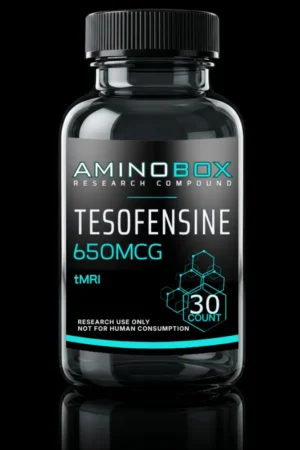
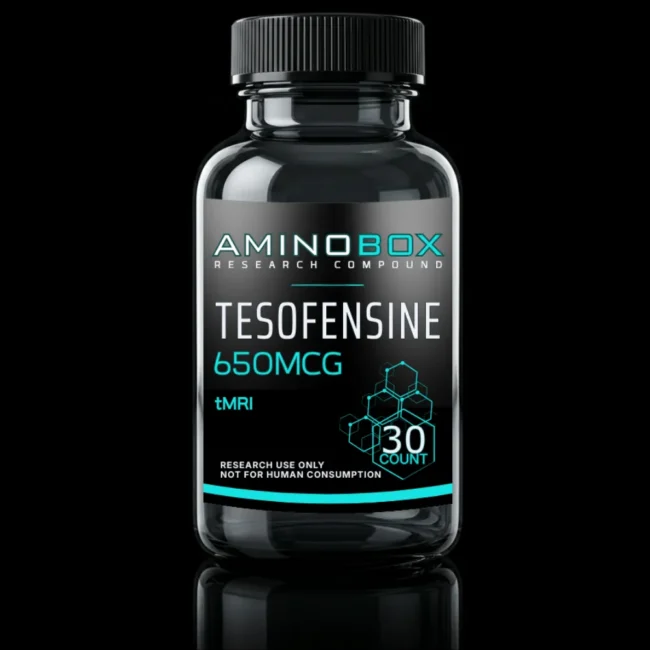
| Capsule Content | 650 mcg (0.65 mg) |
| Package Size | 30 Capsules |
| Compound Class | Triple monoamine reuptake inhibitor (SNDRI) |
| Physical Form | Encapsulated powder |
| Appearance | White to off-white powder (capsule fill) |
| Purity | Typically ≥98% (research grade / compounding dependent) |
| Research Category | Appetite regulation / metabolic / neuropharmacology research compound |
Molecular Information
| Property | Specification |
|---|---|
| Molecular Formula | C17H23Cl2NO |
| Molecular Weight | ~332.28 g/mol |
| CAS Number | 195875-84-4 |
| PubChem CID | 11370864 |
| Compound Type | Phenyltropane derivative |
| Stereochemistry | Chiral (multiple stereocenters) |
Structural Classification
| Category | Description |
|---|---|
| Compound Type | Tropane-based phenyltropane analog |
| Functional Class | Serotonin–norepinephrine–dopamine reuptake inhibitor (SNDRI) |
| Biological Focus | Appetite regulation and central energy balance |
| Mechanistic Focus | Increased synaptic monoamines (DA, NE, 5-HT) via reuptake inhibition |
| Chemical Family | CNS-active monoamine transporter inhibitor |
Mechanism Research Profile
| Research Focus | Description |
|---|---|
| Appetite Suppression | Strong reduction in hunger signaling via hypothalamic pathways |
| Monoamine Elevation | Increases dopamine, norepinephrine, serotonin levels in synaptic cleft |
| Energy Expenditure | Studied for increased resting metabolic rate in obesity trials |
| Satiety Signaling | Modulates hypothalamic feeding circuits (lateral hypothalamus activity) |
| Weight Loss Effects | Clinical trials show significant dose-dependent fat loss outcomes |
Research Areas Commonly Associated
| Research Area | Focus |
|---|---|
| Obesity Research | Appetite suppression and weight reduction |
| Neuropharmacology | Monoamine transporter inhibition |
| Metabolic Regulation | Energy balance and thermogenesis |
| CNS Signaling | Dopamine and serotonin modulation |
| Endocrine Appetite Control | Hypothalamic feeding pathways |
Solubility Profile
| Solvent | Solubility |
|---|---|
| Water | Moderately soluble |
| Acidified Water | Highly soluble |
| DMSO | Highly soluble |
| Ethanol | Moderately soluble |
| Lipid solvents | Limited compatibility |
Storage Specifications
| Parameter | Recommendation |
|---|---|
| Capsule Storage | 15–25°C (cool, dry environment) |
| Long-term Storage | 2–8°C preferred |
| Light Sensitivity | Moderate |
| Moisture Sensitivity | High |
| Stability | Stable in dry encapsulated form |
| Container Type | Sealed opaque capsule bottle |
Technical Characteristics
| Feature | Notes |
|---|---|
| Delivery Format | Encapsulated powder (650 mcg per capsule, 30-count bottle) |
| Structural Advantage | High CNS bioavailability due to lipophilic tropane scaffold |
| Bioactivity Profile | Potent monoamine reuptake inhibition |
| Configuration | Synthetic phenyltropane derivative |
| Stability Profile | High stability in dry form |
| Research Use | Laboratory research only |
Tesofensine | 650mcg
From a pharmacological standpoint, Tesofensine is classified as a triple monoamine reuptake inhibitor (tMRI), influencing the synaptic availability of:
- Serotonin (5-HT)
- Norepinephrine (NE)
- Dopamine (DA)
This broad neurotransmitter modulation places Tesofensine within the category of central nervous system metabolic regulators, affecting both appetite signaling and energy balance pathways.
Mechanism of Action (Neuropharmacological Framework)
Tesofensine exerts its primary effects through presynaptic transporter inhibition, specifically targeting the reuptake systems responsible for clearing monoamines from the synaptic cleft.
By inhibiting these transporters, Tesofensine increases extracellular concentrations of:
- Serotonin → satiety signaling and mood regulation
- Norepinephrine → sympathetic activation and energy expenditure
- Dopamine → reward pathway modulation and motivational drive
This results in a coordinated shift in appetite suppression, hedonic feeding behavior reduction, and increased metabolic output.
1. Appetite Regulation & Central Satiety Signaling
Tesofensine’s most studied effect is its influence on hypothalamic appetite control circuits.
Increased serotonin and dopamine signaling contributes to:
- Reduced caloric intake via enhanced satiety perception
- Decreased reward-driven food consumption
- Modulation of hunger signaling pathways in the hypothalamus
- Reduced food-seeking behavior in clinical models
This mechanism is central to its observed weight-loss effects in clinical trials.
2. Energy Expenditure & Sympathetic Activation
By increasing norepinephrine availability, Tesofensine may enhance:
- Basal metabolic rate (BMR)
- Thermogenic activity in peripheral tissues
- Sympathetic nervous system tone
- Lipid mobilization signaling pathways
This creates a dual-action metabolic profile: reduced intake + increased expenditure.
3. Clinical Weight Reduction Data (Research Context)
In human clinical studies, Tesofensine has demonstrated significant dose-dependent reductions in body weight, with reported outcomes including:
- Mean body weight reductions exceeding 10% over ~24 weeks in higher-dose groups
- Appetite suppression as a primary contributor to caloric deficit
- Sustained metabolic changes during treatment periods
These findings positioned Tesofensine as one of the more potent investigational agents in metabolic pharmacology research.
4. Mood, Motivation & Neurochemical Balance
Because Tesofensine influences dopamine and serotonin pathways, research literature notes effects on:
- Mood stabilization and emotional tone
- Increased motivation and behavioral activation
- Reduced hedonic eating patterns
- Enhanced cognitive drive and reward processing
These effects are secondary to its primary metabolic action but are important in CNS-based appetite regulation.
5. Body Composition & Aesthetic Research Context
From a physiological perspective, changes in body composition can influence:
- Dermal tension and skin elasticity dynamics
- Mechanical stress on connective tissue structures
- Subcutaneous fat distribution and facial contouring
- Metabolic efficiency of dermal nutrient delivery systems
In research contexts, Tesofensine is therefore often discussed in relation to metabolic aesthetics and body composition remodeling, rather than direct dermatological action.
6. Metabolic Health Pathways
Tesofensine’s monoaminergic activity may also indirectly influence:
- Glucose metabolism regulation
- Energy substrate utilization (fat vs carbohydrate balance)
- Insulin sensitivity pathways (secondary effects)
- Cardiometabolic risk factor profiles in obesity models
These effects are mediated through central nervous system regulation of peripheral metabolism.
Research Applications
Tesofensine is studied in:
- Obesity and appetite regulation pharmacology
- Neurotransmitter reuptake inhibition research
- Dopaminergic reward system modulation
- Energy expenditure and thermogenesis studies
- Metabolic syndrome and cardiometabolic risk research
- CNS-driven behavioral feeding models
Scientific Summary
Tesofensine is best described as:
“A centrally acting triple monoamine reuptake inhibitor that modulates serotonergic, dopaminergic, and noradrenergic signaling to regulate appetite, energy balance, and metabolic output.”
Its primary mechanistic domains include:
- Appetite suppression via hypothalamic signaling modulation
- Increased sympathetic nervous system activity
- Dopamine-driven reward pathway regulation
- Enhanced metabolic energy expenditure
- Behavioral and motivational feed control systems
Important Notice
This product is supplied strictly for laboratory research, analytical use, and scientific investigation purposes only. It is not intended for human consumption, medical use, or therapeutic application.
Tesofensine is a highly active neuropharmacological compound with significant central nervous system effects in clinical research settings, and all described mechanisms reflect scientific literature and experimental findings rather than approved medical use.
Scientific References – Tesofensine (Triple Monoamine Reuptake Inhibitor)
| Ref # | Title | Journal | Focus | Link |
|---|---|---|---|---|
| 1 | Effect of tesofensine on bodyweight loss, body composition, and quality of life in obese patients: randomized controlled trial | The Lancet | Core human clinical trial: dose-dependent weight loss up to 10.6% | https://pubmed.ncbi.nlm.nih.gov/18950853/ |
| 2 | Tesofensine—a novel potent weight loss medicine | Expert Opinion on Investigational Drugs | Review of clinical efficacy, safety, and mechanism | https://pubmed.ncbi.nlm.nih.gov/19548858/ |
| 3 | Tesofensine, a triple monoamine reuptake inhibitor, and anti-obesity effects | European Neuropsychopharmacology | Dopamine transporter occupancy + CNS mechanism | https://pubmed.ncbi.nlm.nih.gov/24239329/ |
| 4 | Expression of concern: tesofensine weight loss trial safety review | The Lancet | Safety reassessment and post-publication review context | https://pubmed.ncbi.nlm.nih.gov/23561987/ |
| 5 | Tesofensine and weight loss (commentary on clinical findings) | The Lancet | Peer commentary on efficacy and interpretation | https://pubmed.ncbi.nlm.nih.gov/19249625/ |
| 6 | Tesofensine silences hypothalamic GABAergic neurons (mechanism study) | PLOS ONE | Neurobiology of appetite suppression in hypothalamus | https://pubmed.ncbi.nlm.nih.gov/38656972/ |
| 7 | Dopamine transporter occupancy by tesofensine measured with PET imaging | European Neuropsychopharmacology | Neuroimaging evidence of DAT inhibition | https://pubmed.ncbi.nlm.nih.gov/24239329/ |
| 8 | Monoaminergic regulation of appetite and obesity pharmacotherapy | Nature Reviews Drug Discovery | Mechanistic overview of serotonin/norepinephrine/dopamine systems | https://pubmed.ncbi.nlm.nih.gov/21455274/ |