black bar

encapsulated

Subtitle

black bar

reagents

Subtitle

black bar

oral_mucosal

Subtitle

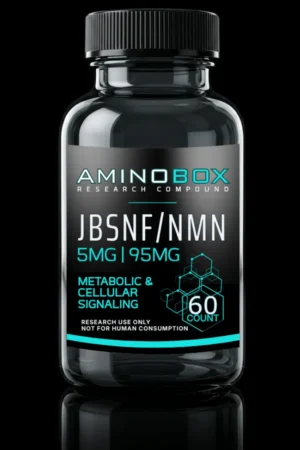
JBSNF / NMN

hexagon logo

capsule

hexagon logo

JBSNF with NMN for applications involving cellular energy metabolism, redox biology, regenerative repair, and mitochondrial function.

$68.00

  • COLD-CHAIN LOGISTICS
  • LAB TESTED
  • ASSURED SHIPPING
  • BATCH CODING

In stock

Guaranteed Safe Checkout

visa accepted
mastercard accepted
discover credit card accepted
amex accepted
  • By purchasing any products, you acknowledge and agree that all materials are supplied solely for scientific research, laboratory experimentation, or analytical purposes.
Form
Capsule
Molecular Formula
C11H15N2O8P / See COA
Molecular Weight
334.22 g/mol (NMN) / See COA
CAS Number
1094-61-7 (NMN) / See COA
PubChem CID
14180 (NMN)
Research Data
Primary Effect Over Time
Literature
Cellular Ratio
Comparative Metric
Activity Profile
Activity Profile
Mechanism
Cellular Pathway
01
NMN → NAD+ Biosynthesis
02
NAD+ / SIRT1 / PGC-1α Axis
03
NAD+ / SIRT3 / Mitochondria
04
NAD+ / PARP1 / DNA Repair
Metabolic Network
Biosynthesis Map
NMN → NAD+ Biosynthesis
NAD+ / SIRT1 / PGC-1α Axis
NAD+ / SIRT3 / Mitochondria
NAD+ / PARP1 / DNA Repair
Repair Systems
Stress
Mitochondria
Energy
NMN + JBSNF CENTRAL HUB
Research Focus
Research Coverage
Product Data
Compound Identity
Product NameNMN | Nicotinamide Mononucleotide
Functional ClassSynthetics
FormCapsule
Purity99%+
Content5mg
Count1 capsule
Research UseResearch Grade
Specifications
Technical Specs
CAS Number1094-61-7 (NMN) / See COA
Molecular Weight334.22 g/mol (NMN) / See COA
Molecular FormulaC11H15N2O8P / See COA
PubChem CID14180 (NMN)
AppearanceCapsule
Storage2-8C preferred
Product Specs
Solubility Profile
WaterHighly soluble
Acidified WaterHighly soluble
DMSOHighly soluble
EthanolModerate
Lipid solventsPoor compatibility
Product Specs
Storage Specs
Lyophilized2–8°C preferred
Long-term−20°C recommended
Light SensitivityModerate
MoistureHigh sensitivity
StabilityStable when dry
ContainerSterile sealed vial
Literature
Research Citations
Catalogue Pathway
Related Systems
Use this for internal linking, adjacent products, and quick route-back buttons.
!
Important Notice
Research Use Only

AminoBox products are supplied for research, analytical, and laboratory use only. Product information is provided for educational and technical reference and does not constitute medical advice. Products are not intended to diagnose, treat, cure, or prevent any disease.

Product Composition

Property Specification
Product Name JBSNF-000088 + NMN Blend
Alternate Names β-Nicotinamide Mononucleotide + 6-Methoxynicotinamide (NNMT inhibitor)
Capsule Content 5mg / 95mg
Package Size 60 Capsules
Compound Class NAD⁺ precursor + NNMT metabolic inhibitor blend
Physical Form Encapsulated powder
Appearance White to off-white powder
Purity Typically ≥98% (NMN beta-isomer dependent; research grade blend)
Research Category Cellular energy metabolism / NAD⁺ salvage pathway / metabolic regulation research

Molecular Information

Property NMN JBSNF-000088
Molecular Formula C₁₁H₁₅N₂O₈P C₇H₈N₂O₂
Molecular Weight ~334.2 g/mol ~152.15 g/mol
CAS Number 1094-61-7 7150-23-4
PubChem CID 14108020 252827453
Compound Type Nucleotide (NAD⁺ precursor) Nicotinamide analog (NNMT inhibitor)
Stereochemistry Beta-isomer biologically active Achiral

Structural Classification

Category Description
Compound Type NAD⁺ precursor nucleotide + nicotinamide analog
Functional Class Energy metabolism + methylation regulation system
Biological Focus Cellular NAD⁺ availability & nicotinamide clearance pathways
Mechanistic Focus NAD⁺ salvage pathway support + NNMT inhibition synergy
Chemical Family Nucleotide + pyridine derivative blend

Mechanism Research Profile

Research Focus Description
NAD⁺ Biosynthesis NMN acts as direct precursor in NAD⁺ salvage pathway
Cellular Energy Metabolism Supports mitochondrial ATP production via NAD⁺ availability
NNMT Inhibition JBSNF-000088 inhibits nicotinamide N-methyltransferase, reducing nicotinamide clearance and methylation drain
Metabolic Regulation Studied in glucose control and adipose metabolism models
Synergistic Pathway Support Combination targets both NAD⁺ replenishment and reduced NAD⁺ waste conversion

Research Areas Commonly Associated

Research Area Focus
Longevity Biology NAD⁺ decline and cellular aging pathways
Metabolic Health Glucose regulation and insulin sensitivity
Mitochondrial Function Energy production efficiency
Epigenetic Regulation Methylation cycle balance (NNMT pathway)
Cellular Stress Response Oxidative stress and repair signaling

Solubility Profile

Solvent Solubility
Sterile Water NMN: highly soluble / JBSNF: soluble
Buffered Solutions Compatible
DMSO Highly soluble (both compounds)
Ethanol Moderate compatibility
Lipid solvents Limited compatibility

Storage Specifications

Parameter Recommendation
Capsule Storage 2–8°C preferred
Long-term Storage -20°C recommended
Light Sensitivity Moderate
Moisture Sensitivity High (especially NMN)
Stability Stable in dry encapsulated form
Container Type Sealed opaque moisture-resistant bottle

Technical Characteristics

Feature Notes
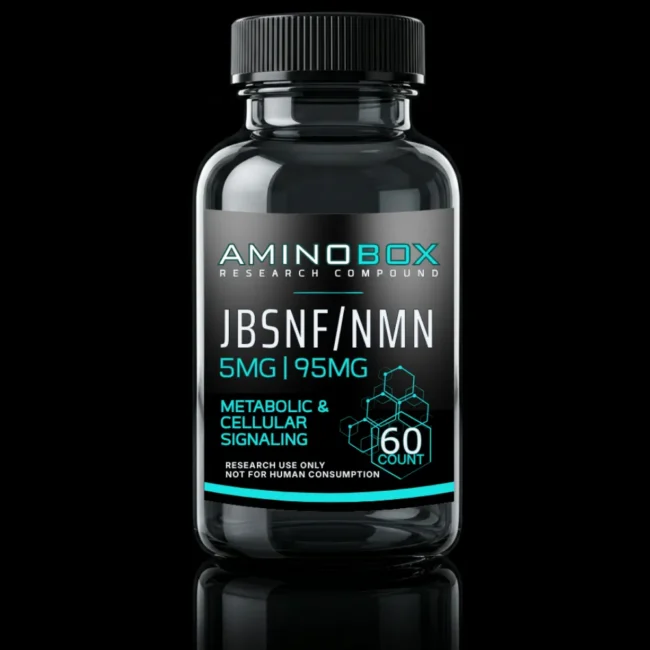
Delivery Format Encapsulated powder (95mg NMN / 5mg JBSNF-000088, 60-count bottle)
Structural Advantage Dual-pathway metabolic support (NAD⁺ replenishment + NNMT inhibition)
Bioactivity Profile Cellular energy + methylation economy modulation
Configuration Nucleotide + small-molecule inhibitor blend
Stability Profile NMN sensitive to heat/moisture; JBSNF stable in dry form
Research Use Laboratory research only

NMN + JBSNF | 95mg / 5mg | 60 Capsules

JBSNF-000088 Specifications

Mechanism Research Profile

JBSNF-000088 was developed as a small-molecule inhibitor of:

  • Nicotinamide N-methyltransferase (NNMT)

The compound has been researched for effects involving:

  • metabolic regulation
  • insulin sensitivity
  • glucose metabolism
  • adipose tissue signaling
  • cellular energy pathways

Research demonstrated reductions in:

  • MNA (1-methyl nicotinamide) levels
  • body weight in obese animal models
  • insulin resistance markers

Research Areas Commonly Associated

  • Metabolic pathway research
  • Cellular energy regulation
  • NAD+ metabolism
  • Glucose modulation
  • Insulin sensitivity research
  • Obesity and adipose signaling studies
  • Longevity and metabolic health research

Solubility Profile

Solvent Solubility
DMSO Highly soluble
Water Slightly soluble
Ethanol Moderately soluble
DMF Soluble

Storage Specifications

Parameter Recommendation
Storage Temperature -20°C preferred
Light Sensitivity Moderate
Moisture Sensitivity Moderate
Container Type Airtight amber vial
Stability Stable under controlled dry storage

Over the past decade, NMN has emerged as one of the most extensively discussed compounds within longevity and metabolic research due to its central role as a direct precursor to Nicotinamide Adenine Dinucleotide (NAD⁺), a critically important coenzyme involved in virtually every major cellular energy-producing pathway. (nature.com)

The addition of JBSNF — a proprietary adjunct research compound investigated for potential synergistic metabolic support mechanisms — positions this formulation within a growing category of experimental NAD⁺ optimization systems designed to explore broader mitochondrial and energetic signaling pathways.

Understanding NMN (β-Nicotinamide Mononucleotide)

NMN is a naturally occurring nucleotide intermediate involved in the NAD⁺ salvage pathway, the primary biological system responsible for maintaining intracellular NAD⁺ availability.

Chemically, NMN serves as a direct precursor molecule to NAD⁺ through enzymatic conversion mediated by nicotinamide phosphoribosyltransferase (NAMPT) and NMN adenylyltransferase (NMNAT) pathways. (cell.com)

NAD⁺ itself is one of the most fundamentally important molecules in cellular biology, participating directly in:

  • Mitochondrial ATP production
  • Oxidative phosphorylation
  • Electron transport chain activity
  • Cellular redox reactions
  • DNA repair systems
  • Sirtuin signaling pathways
  • Metabolic stress adaptation
  • Circadian rhythm regulation

Because NAD⁺ levels appear to decline progressively with aging, oxidative stress, metabolic dysfunction, and mitochondrial deterioration, compounds capable of supporting NAD⁺ biosynthesis have become major areas of scientific investigation within longevity and metabolic research communities. (nature.com)


The Central Role of NAD⁺ in Cellular Biology

To understand the scientific importance of NMN, it is necessary to appreciate the extraordinary breadth of biological systems dependent upon NAD⁺ availability.

NAD⁺ functions as a critical electron carrier within mitochondrial respiration, particularly during glycolysis, the Krebs cycle, and oxidative phosphorylation. During these reactions, NAD⁺ cycles between oxidized (NAD⁺) and reduced (NADH) states, enabling efficient transfer of electrons necessary for ATP generation.

Without adequate NAD⁺ availability:

  • Mitochondrial efficiency declines
  • ATP production becomes impaired
  • Oxidative stress may increase
  • DNA repair capacity may diminish
  • Cellular resilience pathways become compromised

This relationship has positioned NAD⁺ biology at the center of modern aging and metabolic research. (nih.gov)


Sirtuins, Longevity & Metabolic Signaling

One of the most heavily researched aspects of NAD⁺ biology involves its interaction with sirtuins — a family of NAD⁺-dependent regulatory proteins involved in cellular adaptation and metabolic homeostasis.

Sirtuins are implicated in:

  • Mitochondrial biogenesis
  • Oxidative stress regulation
  • Inflammatory signaling balance
  • DNA repair pathways
  • Cellular survival responses
  • Metabolic flexibility
  • Circadian rhythm synchronization

Because sirtuin activity is directly dependent upon NAD⁺ availability, researchers have become increasingly interested in whether NAD⁺ precursor compounds such as NMN may influence broader cellular resilience systems. (cell.com)

This relationship between NMN, NAD⁺ metabolism, and sirtuin activation remains one of the foundational scientific drivers behind the compound’s rapid emergence within longevity-focused research environments.


Mitochondrial Function & Energy Metabolism Research

Mitochondria are responsible for generating the majority of cellular ATP through oxidative metabolism. As organisms age, mitochondrial efficiency often declines due to cumulative oxidative damage, impaired biogenesis, and dysregulated energy signaling.

Research involving NMN has therefore focused heavily on pathways associated with:

  • Mitochondrial respiration
  • ATP generation efficiency
  • Oxidative phosphorylation
  • Cellular energy utilization
  • Metabolic flexibility
  • Redox homeostasis
  • Cellular stress adaptation

Experimental investigations continue exploring how NAD⁺ precursor availability may influence these systems across multiple tissue types. (nature.com)


Age-Associated NAD⁺ Decline

One of the most significant discoveries within longevity research over the past two decades has been the observation that NAD⁺ levels appear to decline progressively during aging.

Several mechanisms may contribute to this decline, including:

  • Increased CD38 enzyme activity
  • Chronic inflammatory stress
  • Oxidative cellular damage
  • Impaired NAMPT activity
  • Mitochondrial dysfunction
  • DNA repair-associated NAD⁺ consumption

Because NAD⁺ participates in such a wide range of cellular processes, reductions in NAD⁺ availability may theoretically influence systemic metabolic resilience and mitochondrial performance. (nih.gov)

Research involving NMN and related NAD⁺ precursors is therefore largely centered around understanding whether restoration of intracellular NAD⁺ pools may influence broader energetic and cellular signaling pathways.


JBSNF: Adjunct Research Compound

JBSNF-000088 is a research-grade small molecule investigated for its role in modulating nicotinamide N-methyltransferase (NNMT), an enzyme involved in cellular energy metabolism and metabolic signaling pathways.

Preclinical research has explored NNMT inhibition for its potential relationship to:

• NAD+ metabolic regulation
• Mitochondrial energy utilization
• Glucose and lipid metabolism
• Cellular nutrient-sensing pathways
• Metabolic efficiency and adaptive signaling

Within experimental formulations, JBSNF-000088 is commonly studied alongside compounds associated with longevity biology, metabolic optimization, and cellular energy research frameworks.

Current literature surrounding NNMT modulation remains actively evolving, and ongoing research continues to investigate the broader implications of these pathways in metabolic and age-related biological systems.


Oral Delivery & Bioavailability Considerations

NMN is generally studied as an orally administered NAD⁺ precursor due to its relatively favorable gastrointestinal survivability compared to larger peptide molecules.

Current research discussions investigate several possible absorption and utilization mechanisms, including:

  • Direct intestinal absorption
  • Extracellular conversion pathways
  • Slc12a8 transporter involvement
  • Systemic nicotinamide salvage pathway integration

However, important questions regarding optimal dosing, tissue distribution, pharmacokinetics, and long-term metabolic effects remain areas of ongoing investigation. (cell.com)


Research Community Interest

Within metabolic and longevity-focused research communities, NMN formulations are frequently discussed alongside topics involving:

  • Mitochondrial optimization
  • NAD⁺ restoration pathways
  • Sirtuin activation research
  • Cellular resilience signaling
  • Bioenergetic efficiency
  • Healthy aging models
  • Metabolic adaptation systems
  • Redox biology

Interest in NAD⁺ precursor science has expanded dramatically as researchers continue investigating the relationship between mitochondrial function, cellular aging, and systemic metabolic health. (reddit.com)


Important Research Disclaimer

This product is supplied strictly for laboratory, analytical, and research purposes only. Not intended to diagnose, treat, cure, or prevent any disease. Not approved for human consumption. NMN and associated investigational metabolic compounds remain areas of ongoing scientific study, and many proposed mechanisms continue to be explored within preclinical and early-stage human research environments.


NMN & NNMT (JBSNF) Research Table

Category Title Focus Link
NNMT Inhibitor Research Potent Uncompetitive Inhibitors of Nicotinamide N-Methyltransferase (NNMT) Core NNMT inhibitor development & metabolic probes https://pubs.acs.org/doi/10.1021/acs.jmedchem.2c01166
NNMT Drug Discovery Discovery of Bisubstrate Inhibitors of NNMT Early medicinal chemistry work on NNMT inhibition https://pubs.acs.org/doi/10.1021/acs.jmedchem.7b01422
NNMT Mechanisms Review Mechanisms and Inhibitors of Nicotinamide N-Methyltransferase Full biological + metabolic pathway overview https://pmc.ncbi.nlm.nih.gov/articles/PMC8372200/
NNMT Structure Optimization Bisubstrate Inhibitors of NNMT (Enhanced Activity) Advanced inhibitor optimization research https://www.sciencedirect.com/science/article/pii/S1520480419001893
NMN Human Study NMN Supplementation in Healthy Adults Safety + metabolic effects in humans https://link.springer.com/article/10.1007/s11357-022-00705-1
NAD⁺ Biology Review NAD⁺ Metabolism and Healthy Aging NAD⁺ decline, mitochondria, aging biology https://www.ncbi.nlm.nih.gov/pmc/articles/PMC7238909/
NMN Cellular Metabolism Cell Metabolism – NMN & NAD⁺ Pathways NAD⁺ salvage pathway + mitochondrial function https://www.cell.com/cell-metabolism/fulltext/S1550-4131(16)30495-8
NAD⁺ Precursor Trial NRPT Increases NAD⁺ in Humans Human clinical NAD⁺ elevation study https://www.nature.com/articles/s41514-017-0016-9